http://tinyurl.com/4y3mg63
http://tinyurl.com/6xz4naq
http://tinyurl.com/3fhyckj
http://tinyurl.com/3oa2z73
http://tinyurl.com/5tcggy8
http://tinyurl.com/42sfl7a
http://tinyurl.com/3w3s5jt
http://tinyurl.com/5sn7ssx
Showing posts with label Genetically Modified Organisms. Show all posts
Showing posts with label Genetically Modified Organisms. Show all posts
Saturday, October 08, 2011

Wednesday, February 18, 2009
Monsanto and Secrecy
EU court attacks GM crop secrecy
Anti-GM protest in Luxembourg, 20 Oct 08
Anti-GM campaigners have widespread support in the EU
Europe's top court has ruled that EU governments have no right to conceal the location of field trials of genetically modified (GM) crops.
The European Court of Justice was responding to a case brought by Pierre Azelvandre in Alsace, eastern France.
He wanted to know where GM field trials had taken place in his local area.
The only EU-approved GM crop is a strain of corn developed by the US firm Monsanto. But GM trials for research are legal, under strict controls.
The court in Luxembourg ruled on Tuesday that "information relating to the location of the release can in no case be kept confidential".
It said "considerations relating to the protection of public order and other secrets protected by law... cannot constitute reasons capable of restricting access to the information listed by the [EU] directive, including in particular those relating to the location of release".
On Monday, the European Commission failed in a bid to force the governments of France and Greece to allow Monsanto's GM corn to be grown in their countries.
Opponents of GM crops say more scientific data is needed, arguing that their long-term genetic impact on humans and wildlife could be harmful.
The biotech industry says the crops are as safe as traditional varieties, and that they would provide plentiful, cheaper food.
Anti-GM protest in Luxembourg, 20 Oct 08
Anti-GM campaigners have widespread support in the EU
Europe's top court has ruled that EU governments have no right to conceal the location of field trials of genetically modified (GM) crops.
The European Court of Justice was responding to a case brought by Pierre Azelvandre in Alsace, eastern France.
He wanted to know where GM field trials had taken place in his local area.
The only EU-approved GM crop is a strain of corn developed by the US firm Monsanto. But GM trials for research are legal, under strict controls.
The court in Luxembourg ruled on Tuesday that "information relating to the location of the release can in no case be kept confidential".
It said "considerations relating to the protection of public order and other secrets protected by law... cannot constitute reasons capable of restricting access to the information listed by the [EU] directive, including in particular those relating to the location of release".
On Monday, the European Commission failed in a bid to force the governments of France and Greece to allow Monsanto's GM corn to be grown in their countries.
Opponents of GM crops say more scientific data is needed, arguing that their long-term genetic impact on humans and wildlife could be harmful.
The biotech industry says the crops are as safe as traditional varieties, and that they would provide plentiful, cheaper food.
Tuesday, January 06, 2009
Et Tu, Obama?
from the December 26, 2008 edition - http://www.csmonitor.com/2008/1226/p09s02-coop.html
A food agenda for Obama
Now's the time to reinvent America's farm and food policies.
By Christopher D. Cook
San Francisco
Within hours of former Iowa Gov. Tom Vilsack's nomination last week as Agriculture secretary, websites were humming with well-documented critiques of his affinity for genetically engineered crops, agribusiness giant Monsanto, heavily polluting factory farms, and other Big Farm interests.
Some critics expressed outrage, others surprise, especially since they had mounted a vigorous, 55,000-plus strong online petition to persuade President-elect Barack Obama to nominate someone more progressive who would promote sustainable food and farming.
The need for sweeping change could not be clearer when it comes to our food: At taxpayer expense, current policy subsidizes large corporate farms and destructive industrial agriculture, which rob the countryside of economic diversity and precious environmental resources, such as water and topsoil.
These same subsidies, and anemic regulatory enforcement, encourage an increasingly monopolized food system, and a "cheap food" policy that lards us with fatty, processed foods – the cost of which is ultimately dear, more than $100 billion annually for obesity and diet-related diseases. Today's food system also generates a sizable portion of America's greenhouse gases, and rests on fast-dwindling and volatile oil supplies.
Now is the time for something different – change we can eat.
As Mr. Obama weighs a massive stimulus package, he should include new funding streams that promote sustainable food – to build up alternatives such as farmer's markets, local "foodshed" programs that promote consumption of local produce, and farm-to-institution projects that encourage schools, hospitals, and other large buyers to purchase local organic foods when possible.
The change we need in food is as urgent as any we face – changes that affect national health, energy security, global warming, and more. Here, then, is a not-so-modest nine-point platform for food reform, some of which could be included in Obama's stimulus package. Other elements may require a lengthier policy push:
1. New public investments targeting sustainable agriculture, defined as organic, small- to mid-sized, diversified farming.
2. New investments in local/regional food networks and foodsheds – to help build up the connections between farmers and consumers, to open up and expand new markets for organic farmers and those considering the transition; for more farmer's markets and food stores that feature local produce.
3. A moratorium on agribusiness mergers, and strenuous antitrust provisions and enforcement to protect what little is left of diversity in the food economy.
4. A moratorium on all new genetically modified (GMO) products, and an expansion of existing ones, and appointment of a blue-ribbon panel/commission to assess the impact of GMO foods on our environment and our health.
5. A moratorium on – and gradual phasing out of – concentrated animal feeding operations, aka factory farms, which are among the nation's top polluters of water and air, and breeders of widespread and virulent bacterial strains.
6. Dramatically expanded regulatory enforcement and staffing in the US Department of Agriculture and the Food and Drug Administration to protect food safety and meat industry labor and environmental practices.
7. Slowing the hazardously fast meatpacking (and poultry) assembly line, to protect workers and consumers.
8. Incentives for small-scale urban, suburban, and rural farming ventures oriented toward diversified local food systems.
9. Bold public investment in a raft of public awareness campaigns that build support, and expand markets and demand, for sustainable alternatives such as urban agriculture and gardening, and reducing fast-food consumption.
10. Fill in the blank, and send me your thoughts at www.christopherdcook.com.
Food is a vital cornerstone of both individual life and civil society, and our current system is making us fatter, churning out greenhouse gases, and abusing workers and animals.
With a new administration elected on a "change" agenda, it's a timely moment to press for the most basic change of all: change in the food that ends up on our plates and in our bodies.
• Christopher D. Cook is a journalist and the author of "Diet for a Dead Planet: Big Business and the Coming Food Crisis."
A food agenda for Obama
Now's the time to reinvent America's farm and food policies.
By Christopher D. Cook
San Francisco
Within hours of former Iowa Gov. Tom Vilsack's nomination last week as Agriculture secretary, websites were humming with well-documented critiques of his affinity for genetically engineered crops, agribusiness giant Monsanto, heavily polluting factory farms, and other Big Farm interests.
Some critics expressed outrage, others surprise, especially since they had mounted a vigorous, 55,000-plus strong online petition to persuade President-elect Barack Obama to nominate someone more progressive who would promote sustainable food and farming.
The need for sweeping change could not be clearer when it comes to our food: At taxpayer expense, current policy subsidizes large corporate farms and destructive industrial agriculture, which rob the countryside of economic diversity and precious environmental resources, such as water and topsoil.
These same subsidies, and anemic regulatory enforcement, encourage an increasingly monopolized food system, and a "cheap food" policy that lards us with fatty, processed foods – the cost of which is ultimately dear, more than $100 billion annually for obesity and diet-related diseases. Today's food system also generates a sizable portion of America's greenhouse gases, and rests on fast-dwindling and volatile oil supplies.
Now is the time for something different – change we can eat.
As Mr. Obama weighs a massive stimulus package, he should include new funding streams that promote sustainable food – to build up alternatives such as farmer's markets, local "foodshed" programs that promote consumption of local produce, and farm-to-institution projects that encourage schools, hospitals, and other large buyers to purchase local organic foods when possible.
The change we need in food is as urgent as any we face – changes that affect national health, energy security, global warming, and more. Here, then, is a not-so-modest nine-point platform for food reform, some of which could be included in Obama's stimulus package. Other elements may require a lengthier policy push:
1. New public investments targeting sustainable agriculture, defined as organic, small- to mid-sized, diversified farming.
2. New investments in local/regional food networks and foodsheds – to help build up the connections between farmers and consumers, to open up and expand new markets for organic farmers and those considering the transition; for more farmer's markets and food stores that feature local produce.
3. A moratorium on agribusiness mergers, and strenuous antitrust provisions and enforcement to protect what little is left of diversity in the food economy.
4. A moratorium on all new genetically modified (GMO) products, and an expansion of existing ones, and appointment of a blue-ribbon panel/commission to assess the impact of GMO foods on our environment and our health.
5. A moratorium on – and gradual phasing out of – concentrated animal feeding operations, aka factory farms, which are among the nation's top polluters of water and air, and breeders of widespread and virulent bacterial strains.
6. Dramatically expanded regulatory enforcement and staffing in the US Department of Agriculture and the Food and Drug Administration to protect food safety and meat industry labor and environmental practices.
7. Slowing the hazardously fast meatpacking (and poultry) assembly line, to protect workers and consumers.
8. Incentives for small-scale urban, suburban, and rural farming ventures oriented toward diversified local food systems.
9. Bold public investment in a raft of public awareness campaigns that build support, and expand markets and demand, for sustainable alternatives such as urban agriculture and gardening, and reducing fast-food consumption.
10. Fill in the blank, and send me your thoughts at www.christopherdcook.com.
Food is a vital cornerstone of both individual life and civil society, and our current system is making us fatter, churning out greenhouse gases, and abusing workers and animals.
With a new administration elected on a "change" agenda, it's a timely moment to press for the most basic change of all: change in the food that ends up on our plates and in our bodies.
• Christopher D. Cook is a journalist and the author of "Diet for a Dead Planet: Big Business and the Coming Food Crisis."
Friday, October 17, 2008
Science Group: Biotech Regs Could Allow Drugs In Food
Science Group: Biotech Regs Could Allow Drugs In Food
Published: Monday, October 13, 2008 3:08 PM CDT
WASHINGTON — The Union of Concerned Scientists (UCS) recently denounced newly proposed U.S. Department of Agriculture (USDA) rules governing genetically engineered crops, including food crops engineered to produce pharmaceutical and industrial products. The proposed rules, UCS charged, would not protect the U.S. food supply from potential contamination by drugs from "pharma" crops and could allow drugs that it deems "safe" to enter the food supply. This contamination could occur through cross-pollination or seed mixing between pharma food crops and crops intended for consumption.
The USDA ignored recommendations for a ban on the outdoor production of pharma food crops from the Grocery Manufacturers Association, major food companies, UCS, and more than 100 environmental, agricultural, health, and consumer organizations.
Below is a statement by Jane Rissler, UCS's Food and Environment Program deputy director:
"Under the proposed rules, USDA's new motto is 'Only safe levels of drugs in U.S. food.‚ If these proposals are enacted into law, American consumers must accept the possibility of drugs in their breakfast cereal or other common foods. Moreover, these rules likely will lead to contamination scares, which will hurt the food industry.
"The USDA proposal, unlike the ban we recommended, offers no incentives to drug companies to pursue already existing, safer methods for producing drugs.
"In its rush to enact the proposed rules into law before the end of the Bush administration, the USDA has given short shrift to public participation. The department is allowing only 45 days for the public to analyze and comment on this major proposal, which will determine the government's approach to regulating genetically engineered organisms for years to come.
http://yankton.net/articles/2008/10/17/neighbors/doc48f3aaa2e5e9e984781507.txt#rate
http://snipurl.com/4gigv
Published: Monday, October 13, 2008 3:08 PM CDT
WASHINGTON — The Union of Concerned Scientists (UCS) recently denounced newly proposed U.S. Department of Agriculture (USDA) rules governing genetically engineered crops, including food crops engineered to produce pharmaceutical and industrial products. The proposed rules, UCS charged, would not protect the U.S. food supply from potential contamination by drugs from "pharma" crops and could allow drugs that it deems "safe" to enter the food supply. This contamination could occur through cross-pollination or seed mixing between pharma food crops and crops intended for consumption.
The USDA ignored recommendations for a ban on the outdoor production of pharma food crops from the Grocery Manufacturers Association, major food companies, UCS, and more than 100 environmental, agricultural, health, and consumer organizations.
Below is a statement by Jane Rissler, UCS's Food and Environment Program deputy director:
"Under the proposed rules, USDA's new motto is 'Only safe levels of drugs in U.S. food.‚ If these proposals are enacted into law, American consumers must accept the possibility of drugs in their breakfast cereal or other common foods. Moreover, these rules likely will lead to contamination scares, which will hurt the food industry.
"The USDA proposal, unlike the ban we recommended, offers no incentives to drug companies to pursue already existing, safer methods for producing drugs.
"In its rush to enact the proposed rules into law before the end of the Bush administration, the USDA has given short shrift to public participation. The department is allowing only 45 days for the public to analyze and comment on this major proposal, which will determine the government's approach to regulating genetically engineered organisms for years to come.
http://yankton.net/articles/2008/10/17/neighbors/doc48f3aaa2e5e9e984781507.txt#rate
http://snipurl.com/4gigv
Wednesday, August 06, 2008
Monday, June 02, 2008
TROJAN HORSE
Bush seeks $770M in food help during crisis
Kareem Elgazzar
Issue date: 6/2/08 Section: News
The Bush administration is seeking congressional approval of a $770 million food package in an effort to ease the world food crisis. If approved, the U.S. Agency for International Development would spend $150 million on development farming, which would include the use of genetically modified crops.
Genetically modified crops are produced from crops whose genetic makeup have been altered through a process called recombinant DNA, or gene splicing, to give the plant a desirable trait, according to a 2003 report in the U.S. Food and Drug Administration's FDA Consumer.
Using the tools of genetic engineering allows the transfer of useful genes from one organism to a totally unrelated organism. Plants can be used, for example, to produce human proteins, such as insulin and antibodies, according to "Plants and Society," a textbook co-authored by Estelle Levetin and Karen McMahon.
"The building blocks for DNA and proteins are largely universal across organisms," said Susan Dunford, associate professor of biological sciences and instructor of a plants and people course. "As with any technology, the potential benefits, which are considerable, need to be weighed against the potential risks."
As the value or detriment of genetically modified, or bioengineered, food is ambiguous to researchers in the U.S. and Europe, the Ohio Department of Agriculture has done little research or development into the issue.
© 2008 The News Record
Poor farmers world wide can't take advantage of genetically modified crops since the modifications are meant to save time and man-power ONLY in large agri-businesses. In addition, the seeds produced by GM crops are engineered to prevent normal reproduction of the plant. That means that today's poor farmer using GM crops will have to BUY seed for next year's crops instead of simply harvesting seed as is done normally. Including GM crops in any package of food aid is like sending in a Trojan Horse filled with future hunger and/or dependence on the supplier of the GM seed (most likely, Monsanto) to those markets not currently under the control of the GM crop patent holder. Instead of helping people, the addition of a GM crops provision will actually harm them! It's time for Congress to take a long hard look at future damages that could result from this sneaky maneuver.
Monday, May 19, 2008
FAMINE! IN YOUR FUTURE?
Are bio-fuels as much of a disaster as the use of petroleum and coal? Many think the answer is definitely. And, say many experts, it will be coming to YOUR country soon! Even the United States is vulnerable. Add the rush to produce corn and soy for the making of ethanol (which really doesn't do much in the way of lowering dependence on petroleum) which is not of food grade plus the introduction of genetically modified crops controlled by a very small handful of huge international corporations, and we can easily see the people world-wide losing the ability to produce their own foods! The dangers are so significant and so insidious that we can truly consider world-wide Super Famine (with its attendant diseases) killing even middle income families in the United States - and soon!
If no food is available at affordable prices, people will starve. Fact. It has happened many times in the past in many countries. But never before have we been faced with a Super Famine that will kill the majority of the population in every country, in every city, in every town. and in every neighborhood as we do NOW! The seeds (literally) of our destruction are now being planted.
What can YOU do to protect your family? Consider that the name of the game is short-term profits and politics. Consider that unless governmental bodies are forced to deal with reality and with the very real future consequences of current policies, we are all doomed. Every animal depends on plants ultimately for survival. Predators depend on herbivores. Herbivores depend on plants. When the loss of variability in food and feed crops is assured by GM crops and when not enough food is being grown to feed the ever-expanding population, a small disruption in agricultural production by weather, natural disasters, or the inevitable development of new crop diseases, will drop the entire planet into chaos.
What happens when people are starving? They are driven to do whatever they need to do to survive. Crime, war, murder, migration! Those are not unnatural human acts. Those are the realities with which humankind has been dealing for as long as their were humans. Survivalists think that by arming themselves and building defensible communities and growing their own food they will be safe from the coming calamity. Nothing could be further from the truth. They will be the targets first of governments and then, as governments crumble, of desperate ungoverned people with nothing to lose. What's more, even the super survivalist cannot predict the exact nature of the crisis to come. For how long can food, water, and other necessities be stock-piled? For how long can fearful people within the "family" be controlled? What happens when the children are the first to die and the population of a community drops below that which can sustain the community? How many of us can or are willing to live on starvation rations hidden in a cave and alone?
The only way to truly try to protect YOUR family is to become an activist for environmental stability and sustainable living styles. You can start by setting an example for others. You can join with others to increase your clout politically and economically. You MUST let your voice be heard! Every day brings us ALL closer to the catastrophe looming before us. And we must realize NOW that what affects people on the other side of the globe also affects us.
Check out a few of these links:
http://heidiallen.com/heartfire/energy.htm
http://www.enn.com/
http://www.blogger.com/post-edit.g?blogID=12196737&postID=2174804809549948203
http://w3chi.blogspot.com/2008/05/deadly-gift-from-monsanto-to-india.html
http://www.loe.org/
http://www.ucsusa.org/
http://www.greenpeace.org/international/
http://www.toxicnation.ca/
http://www.edf.org/
If no food is available at affordable prices, people will starve. Fact. It has happened many times in the past in many countries. But never before have we been faced with a Super Famine that will kill the majority of the population in every country, in every city, in every town. and in every neighborhood as we do NOW! The seeds (literally) of our destruction are now being planted.
What can YOU do to protect your family? Consider that the name of the game is short-term profits and politics. Consider that unless governmental bodies are forced to deal with reality and with the very real future consequences of current policies, we are all doomed. Every animal depends on plants ultimately for survival. Predators depend on herbivores. Herbivores depend on plants. When the loss of variability in food and feed crops is assured by GM crops and when not enough food is being grown to feed the ever-expanding population, a small disruption in agricultural production by weather, natural disasters, or the inevitable development of new crop diseases, will drop the entire planet into chaos.
What happens when people are starving? They are driven to do whatever they need to do to survive. Crime, war, murder, migration! Those are not unnatural human acts. Those are the realities with which humankind has been dealing for as long as their were humans. Survivalists think that by arming themselves and building defensible communities and growing their own food they will be safe from the coming calamity. Nothing could be further from the truth. They will be the targets first of governments and then, as governments crumble, of desperate ungoverned people with nothing to lose. What's more, even the super survivalist cannot predict the exact nature of the crisis to come. For how long can food, water, and other necessities be stock-piled? For how long can fearful people within the "family" be controlled? What happens when the children are the first to die and the population of a community drops below that which can sustain the community? How many of us can or are willing to live on starvation rations hidden in a cave and alone?
The only way to truly try to protect YOUR family is to become an activist for environmental stability and sustainable living styles. You can start by setting an example for others. You can join with others to increase your clout politically and economically. You MUST let your voice be heard! Every day brings us ALL closer to the catastrophe looming before us. And we must realize NOW that what affects people on the other side of the globe also affects us.
Check out a few of these links:
http://heidiallen.com/heartfire/energy.htm
http://www.enn.com/
http://www.blogger.com/post-edit.g?blogID=12196737&postID=2174804809549948203
http://w3chi.blogspot.com/2008/05/deadly-gift-from-monsanto-to-india.html
http://www.loe.org/
http://www.ucsusa.org/
http://www.greenpeace.org/international/
http://www.toxicnation.ca/
http://www.edf.org/
Friday, May 16, 2008
Monsanto is the gorilla controlling the seed industry
POSTED: May 12, 2008 By David Kruse
The Times-Republican
135 West Main Street,
Marshalltown, IA 50158
641-753-6611
Fred Stokes, a prominent figure in the Organization for Competitive Markets wrote: “As you know, the seed industry has become highly concentrated, with Monsanto becoming the dominant global player in the industry.”
It is said that he who controls the seed controls the food supply. Monsanto clearly is the 800-pound gorilla and has a reputation for playing rough. The OCM is launching a new project that will take a critical look at the seed industry and the ills of concentration. On Wednesday, April 16, Michael Stumo, OCM General Counsel, and I were guests on the Derry Brownfield Show and discussed the new project and seed industry concentration.
The following Monday, Derry Brownfield was notified that his right to broadcast over the Learfield Communications Network was being terminated; presumably because of the April 16th broadcast.”
Monsanto is ranked 305th out of the fortune 500 in 2007, with revenue of over $8.6 billion and profits of $993 million, up 44.1%. A recent article in Vanity Fair called “Monsanto’s Harvest of Fear,” was scathing in accusations describing Monsanto corporate tactics as “ruthless.”
Vanity Fair wrote, “In 1980, the U.S. Supreme Court, in a five-to-four decision, turned seeds into widgets, laying the groundwork for a handful of corporations to begin taking control of the world’s food supply. In its decision, the court extended patent law to cover ‘a live human-made microorganism.’
The precedent was set, and Monsanto took advantage of it. Since the 1980’s, Monsanto has become the world leader in genetic modification of seeds and has won 674 biotechnology patents, more than any other company, according to U.S. Department of Agriculture data.”
Monsanto first went through the court system to solidify its legal grip on the patent rights of the genetics it develops and then went about changing long held practices of farmers by selling seed but retaining the rights to the genetic traits they have patented. Farmers were used to saving seed, ‘brown bagging’ it as the practice was called.
Farmers were denied the right to save Monsanto’s seed from one crop for the next. When they buy patented seed they don’t “own” the genetic rights, they’re only renting them on an annual basis for a fee.
A lot of farmers did not initially accept the new way of doing business or Monsanto’s patent rights and Monsanto went methodically about teaching lessons to all those who violated their patented rights and seed agreements. Whether Monsanto’s claim to their genetic monopoly is morally right or wrong, it has been legalized by the courts. Monsanto aggressively defends those rights.
You can think the worst of them and call them bad names but Monsanto holds the genetic keys to the future of global food production in their vault and without them, the world will produce less food and fiber at a higher cost. That’s a heck of a valuable monopoly to own.
Monsanto is not infallible. A number of years ago, I challenged them and lived to tell about it.
I have never challenged their patent rights. My companies follow the law and seed agreements both here and in Brazil. I’m a “good” customer of Monsanto and very pleased with the products they sell today. I wasn’t always pleased, however. That’s where my run in with Monsanto occurred.
When they first introduced RR soybeans it was common knowledge that initially in a rush to get their product on the market, they put the RR gene into poor genetic soybean seed and yields lagged. University yield trials showed the yield lag. I confirmed it on my own farm as did neighbors, yet Monsanto bombarded the air waves with a commercial that claimed “higher yields” from their new RR soybean varieties.
A local radio station provided me a copy of the commercial and I produced a CommStock Radio Report interviewing a local farmer who had experienced the RR soybean yield lag and pasted in Monsanto’s erroneous claim to higher yields as “but Monsanto says ... Higher Yields!” Monsanto spends a lot on advertising, giving them clout beyond the control of what gets aired in their commercials. I was summoned by the station owner, who in a very uncomfortable situation for him, backed me.
I was right. Everybody knew it. The result was that Monsanto dropped the “higher yields’ commercials. They ceased to air. Maybe that was a coincidence, but I doubt it. It was simple truth in advertising.
An Asgrow agronomist (Monsanto owns Asgrow), confirmed the technical reasons for the initial RR soybean yield lag and also why it would eventually go away as their breeding program matured.
It did. He was right. I grow RR soybeans today. I don’t believe Monsanto will allow the same thing to happen with their new genetic products. I think it was a case where their advertising department temporarily overshot their genetic capability.
Today, RR soybeans likely do out yield non-GMO varieties, if for no other reason than that nothing is put into seed research for non-GMO varieties any more because seed companies make less money from plain seed and farmers want GMO seed traits. Trendline corn/soybean yields are climbing today and Monsanto genetics can take a lot of credit for that.
Not long after my on air challenge of Monsanto’s commercial advertising, a Monsanto executive paid me a visit. He was professional, cordial and unthreatening. I practice the Golden Rule.
————
David Kruse is president of CommStock Investments,Inc., author and producer of The CommStock Report, an ag commentary and market analysis available daily by radio and by subscription on DTN/FarmDayta and the Internet.
The Times-Republican
135 West Main Street,
Marshalltown, IA 50158
641-753-6611
Fred Stokes, a prominent figure in the Organization for Competitive Markets wrote: “As you know, the seed industry has become highly concentrated, with Monsanto becoming the dominant global player in the industry.”
It is said that he who controls the seed controls the food supply. Monsanto clearly is the 800-pound gorilla and has a reputation for playing rough. The OCM is launching a new project that will take a critical look at the seed industry and the ills of concentration. On Wednesday, April 16, Michael Stumo, OCM General Counsel, and I were guests on the Derry Brownfield Show and discussed the new project and seed industry concentration.
The following Monday, Derry Brownfield was notified that his right to broadcast over the Learfield Communications Network was being terminated; presumably because of the April 16th broadcast.”
Monsanto is ranked 305th out of the fortune 500 in 2007, with revenue of over $8.6 billion and profits of $993 million, up 44.1%. A recent article in Vanity Fair called “Monsanto’s Harvest of Fear,” was scathing in accusations describing Monsanto corporate tactics as “ruthless.”
Vanity Fair wrote, “In 1980, the U.S. Supreme Court, in a five-to-four decision, turned seeds into widgets, laying the groundwork for a handful of corporations to begin taking control of the world’s food supply. In its decision, the court extended patent law to cover ‘a live human-made microorganism.’
The precedent was set, and Monsanto took advantage of it. Since the 1980’s, Monsanto has become the world leader in genetic modification of seeds and has won 674 biotechnology patents, more than any other company, according to U.S. Department of Agriculture data.”
Monsanto first went through the court system to solidify its legal grip on the patent rights of the genetics it develops and then went about changing long held practices of farmers by selling seed but retaining the rights to the genetic traits they have patented. Farmers were used to saving seed, ‘brown bagging’ it as the practice was called.
Farmers were denied the right to save Monsanto’s seed from one crop for the next. When they buy patented seed they don’t “own” the genetic rights, they’re only renting them on an annual basis for a fee.
A lot of farmers did not initially accept the new way of doing business or Monsanto’s patent rights and Monsanto went methodically about teaching lessons to all those who violated their patented rights and seed agreements. Whether Monsanto’s claim to their genetic monopoly is morally right or wrong, it has been legalized by the courts. Monsanto aggressively defends those rights.
You can think the worst of them and call them bad names but Monsanto holds the genetic keys to the future of global food production in their vault and without them, the world will produce less food and fiber at a higher cost. That’s a heck of a valuable monopoly to own.
Monsanto is not infallible. A number of years ago, I challenged them and lived to tell about it.
I have never challenged their patent rights. My companies follow the law and seed agreements both here and in Brazil. I’m a “good” customer of Monsanto and very pleased with the products they sell today. I wasn’t always pleased, however. That’s where my run in with Monsanto occurred.
When they first introduced RR soybeans it was common knowledge that initially in a rush to get their product on the market, they put the RR gene into poor genetic soybean seed and yields lagged. University yield trials showed the yield lag. I confirmed it on my own farm as did neighbors, yet Monsanto bombarded the air waves with a commercial that claimed “higher yields” from their new RR soybean varieties.
A local radio station provided me a copy of the commercial and I produced a CommStock Radio Report interviewing a local farmer who had experienced the RR soybean yield lag and pasted in Monsanto’s erroneous claim to higher yields as “but Monsanto says ... Higher Yields!” Monsanto spends a lot on advertising, giving them clout beyond the control of what gets aired in their commercials. I was summoned by the station owner, who in a very uncomfortable situation for him, backed me.
I was right. Everybody knew it. The result was that Monsanto dropped the “higher yields’ commercials. They ceased to air. Maybe that was a coincidence, but I doubt it. It was simple truth in advertising.
An Asgrow agronomist (Monsanto owns Asgrow), confirmed the technical reasons for the initial RR soybean yield lag and also why it would eventually go away as their breeding program matured.
It did. He was right. I grow RR soybeans today. I don’t believe Monsanto will allow the same thing to happen with their new genetic products. I think it was a case where their advertising department temporarily overshot their genetic capability.
Today, RR soybeans likely do out yield non-GMO varieties, if for no other reason than that nothing is put into seed research for non-GMO varieties any more because seed companies make less money from plain seed and farmers want GMO seed traits. Trendline corn/soybean yields are climbing today and Monsanto genetics can take a lot of credit for that.
Not long after my on air challenge of Monsanto’s commercial advertising, a Monsanto executive paid me a visit. He was professional, cordial and unthreatening. I practice the Golden Rule.
————
David Kruse is president of CommStock Investments,Inc., author and producer of The CommStock Report, an ag commentary and market analysis available daily by radio and by subscription on DTN/FarmDayta and the Internet.
Deadly gift from Monsanto to India
ISIS Press Release 12/05/08
The Institute of Science in Society, PO Box 51885, London NW2 9DH
telephone: [44 20 8452 2729] [44 20 7272 5636]
To follow up on your articles, Organic Cotton Beats Bt Cotton in India ( SiS 27) and Message from Andra Predesh:Return to organic cotton & avoid the Bt cotton trap ( SiS 29), I enclose photographs of mealy bugs infested cotton plants in the demonstration plots of different seed companies in Vidarbha: Ganga Kavari, Paras Bbhrahma, and Banny. All of the plots have the Bollgard label. These mealy bugs have never been in our region on any plants before Bt cotton was introduced. I learned about the devastation of cotton in China two years ago. This alerted me to photograph and video the demonstration plots regularly. So, anybody can say with confidence now that the mealy bug has entered Vidarbha cotton fields through the Bt cottonseed.
Now when the cotton plants have died, the mealy bug is shifting to nearby plants. By mid June, farmers will go for the new cotton crop or plant another crop. But before that, the bug will have multiplied like any thing. It has shifted to Congress weed nearby, and many other weeds and plants in gardens.
At the same time I am studying the sudden death of plants. The new generation cotton seeds, called ‘Research Hybrid seeds'; are all male sterile. In short, they are terminator seeds; and proven by the high-level government committee in 1993. I have the report of it. The breeder then published an article advising farmers that they should not use the F2 seeds of such hybrids, as the plants coming out of them are 100 percent sterile. Your article, Killing Fields Near You ( ISIS News 7/8) confirmed this for me.
I am an organic farmer residing at Yavatmal in the state of Maharashtra. Our organisation, Vidarbha Organic Farmers Association, has been propagating organic farming since 1994. We have been helped a lot by Dr Vandana Shiva. She was the first person to tell us about about terminators. Right now, we are working for her organisation Navdanya.
Ram Kalaspurkar , organic farmer, Vidarbha Organic Farmers Association, Yavatmal, Maharashtra, India

Bt cotton plant infested with mealy bugs

Close-up of big mealy bug on Bt cotton plant
The Institute of Science in Society, PO Box 51885, London NW2 9DH
telephone: [44 20 8452 2729] [44 20 7272 5636]
To follow up on your articles, Organic Cotton Beats Bt Cotton in India ( SiS 27) and Message from Andra Predesh:Return to organic cotton & avoid the Bt cotton trap ( SiS 29), I enclose photographs of mealy bugs infested cotton plants in the demonstration plots of different seed companies in Vidarbha: Ganga Kavari, Paras Bbhrahma, and Banny. All of the plots have the Bollgard label. These mealy bugs have never been in our region on any plants before Bt cotton was introduced. I learned about the devastation of cotton in China two years ago. This alerted me to photograph and video the demonstration plots regularly. So, anybody can say with confidence now that the mealy bug has entered Vidarbha cotton fields through the Bt cottonseed.
Now when the cotton plants have died, the mealy bug is shifting to nearby plants. By mid June, farmers will go for the new cotton crop or plant another crop. But before that, the bug will have multiplied like any thing. It has shifted to Congress weed nearby, and many other weeds and plants in gardens.
At the same time I am studying the sudden death of plants. The new generation cotton seeds, called ‘Research Hybrid seeds'; are all male sterile. In short, they are terminator seeds; and proven by the high-level government committee in 1993. I have the report of it. The breeder then published an article advising farmers that they should not use the F2 seeds of such hybrids, as the plants coming out of them are 100 percent sterile. Your article, Killing Fields Near You ( ISIS News 7/8) confirmed this for me.
I am an organic farmer residing at Yavatmal in the state of Maharashtra. Our organisation, Vidarbha Organic Farmers Association, has been propagating organic farming since 1994. We have been helped a lot by Dr Vandana Shiva. She was the first person to tell us about about terminators. Right now, we are working for her organisation Navdanya.
Ram Kalaspurkar , organic farmer, Vidarbha Organic Farmers Association, Yavatmal, Maharashtra, India
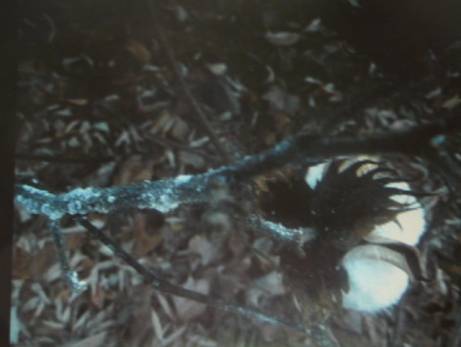
Bt cotton plant infested with mealy bugs

Close-up of big mealy bug on Bt cotton plant
Wednesday, March 26, 2008
Little Guy strikes tiny blow on Monsanto
Monsanto pays Percy Schmeiser
Saskatchewan farmer Percy Schmeiser spent 1998 to 2004 standing up to one of the most influential agricultural companies in the world: Monsanto. While it was Monsanto that took Schmesier to court on that occasion, the roles were reversed on Wednesday, March 19, 2008, when Monsanto found itself being taken to court by Schmeiser.
It was the first case between Monsanto and Schmeiser that led to the 2004 Supreme Court of Canada decision that ruled in favour of Monsanto. While the decision assured that regardless of contamination, a farmer cannot grow patented seeds, Schmeiser recognized that if the company is indeed the owner of the plant, then it should be liable for the damages that their property causes others.
There is no legal precedent in Canada that has determined who maintains the liability for damages caused by patented plants. Monsanto does however accept moral responsiblity for what are known as "volunteers" -- unwanted plants appearing on farmers' fields.
The company employs a program that offers to remove volunteer plants.
In October 2005, Schmeiser's farm was visited yet again by Monsanto, and again, in the form of its RoundUp Ready Canola. Schmeiser took advantage of the company's removal program, but discovered that it would only remove the plants if he signed a release form that contained a confidentiality clause, which he disapproved of. What followed led to an out-of-court settlement on March 19, 2008, and Monsanto paid Schmeiser the $660 it cost him to have the plants removed.
LBy Jon Steinman
Published: March 21, 2008
TheTyee.ca
Saskatchewan farmer Percy Schmeiser spent 1998 to 2004 standing up to one of the most influential agricultural companies in the world: Monsanto. While it was Monsanto that took Schmesier to court on that occasion, the roles were reversed on Wednesday, March 19, 2008, when Monsanto found itself being taken to court by Schmeiser.
It was the first case between Monsanto and Schmeiser that led to the 2004 Supreme Court of Canada decision that ruled in favour of Monsanto. While the decision assured that regardless of contamination, a farmer cannot grow patented seeds, Schmeiser recognized that if the company is indeed the owner of the plant, then it should be liable for the damages that their property causes others.
There is no legal precedent in Canada that has determined who maintains the liability for damages caused by patented plants. Monsanto does however accept moral responsiblity for what are known as "volunteers" -- unwanted plants appearing on farmers' fields.
The company employs a program that offers to remove volunteer plants.
In October 2005, Schmeiser's farm was visited yet again by Monsanto, and again, in the form of its RoundUp Ready Canola. Schmeiser took advantage of the company's removal program, but discovered that it would only remove the plants if he signed a release form that contained a confidentiality clause, which he disapproved of. What followed led to an out-of-court settlement on March 19, 2008, and Monsanto paid Schmeiser the $660 it cost him to have the plants removed.
LBy Jon Steinman
Published: March 21, 2008
TheTyee.ca
Citizens’ group wants a law to ban genetically engineered crops.
Printed from the Monterey County Weekly website: http://www.montereycountyweekly.com/archives/2008/2008-Mar-06/20-citizens-group-wants-a-law-to-ban-genetically-engineered-crops
Ag Advisory Committee considers GMOs
Citizens’ group wants a law to ban genetically engineered crops.
Posted March 06, 2008
By Zachary Stahl
Leading the Charge
Lorna Moffat (front) wants a countywide ban on genetically modified crops.
Several years ago seed giant Monsanto offered Salinas Valley growers a genetic solution to their weed problem with spring mix. Monsanto was developing a lettuce variety resistant to Roundup, the company’s leading herbicide. Farmers could have killed weeds with Roundup without harming the genetically engineered spring mix. But the industry shied away.
“It was dropped very quickly,” says Jim Manassero, chairman of the Monterey County Agricultural Advisory Committee. “Number one, the industry didn’t want it.” Manassero says a state law would have had to change to allow the vegetables to be harvested after being doused with Roundup. Plus, consumers would have balked at the prospect.
“It becomes very easy for that type of science to get blown out of proportion by the media and to make it all lettuce is poisoned or could be,” Manassero says.
The genetically modified seeds never reached the valley floor. While Monsanto has taken over the corn and soybean seed market, Monterey County ag officials maintain that no genetically engineered crops have been grown in the county. Some local organic farmers and environmentalists want to keep it this way.
On Feb. 28 a group of small farmers and Monterey Peninsula residents asked the Agricultural Advisory Committee to recommend a county ban on GE crops. Lorna Moffat, who is spearheading the effort, proposed the moratorium in response to a November speech by Dr. Henry Daniell of the University of Florida about producing insulin from genetically modified lettuce.
Moffat told the committee that federal agencies do a poor job monitoring GE crops, and no long-term studies have been done to monitor their health impacts. “Few regulations to protect public health and our environment are in place,” Moffat said, warning that GE crops could cross-pollinate other produce.
Alex Sancen is an organic farmer who grows on less than five acres at the Agricultural & Land-Based Training Association outside Salinas. Sancen told the committee that his farmers market customers are concerned about GE crops tainting their produce. “They are speaking of buying vegetables from Santa Cruz County if you guys don’t do anything,” Sancen said.
Sancen and dozens of other ALBA farmers want the Monterey County Board of Supervisors to adopt an ordinance similar to one that exists in Santa Cruz County. In 2006 Santa Cruz supervisors banned growing genetically engineered crops. The county code makes exemptions for GE pharmaceuticals grown in state or federally licensed, indoor labs.
Santa Cruz is the most recent California county to prohibit GM crops. In 2004, Mendocino County became the first in the U.S. to ban GMOs, followed by Trinity and Marin counties. While a handful of liberal, coastal counties have outlawed the crops, anti-GMO ballot initiatives in Butte, Humboldt, San Luis Obispo and Sonoma counties have failed at the polls.
In addition, at least 12 counties, mostly in the conservative and agriculturally-rich Central Valley, have passed resolutions supporting ag biotechnology.
The only related thing that Monterey County has on the books is a code regulating the experimental release of GE microorganisms. The county crafted the code in the ‘70s in response to a bacteria intended to prevent frost on strawberries, says Bob Roach, assistant agricultural commissioner.
Pesticide-resistant crops, GE plants and pharmaceuticals fall under the purview of the U.S. Environmental Protection Agency, Department of Agriculture and Food and Drug Administration, respectively, Roach says. County ordinances “are largely symbolic because no one really wanted to grow these crops in these counties,” he adds.
The same goes for Monterey County. “I don’t think they are on our door step,” Roach says. “I don’t think they are even coming up the walk yet.”
But Salinas Mayor Dennis Donohue and some ag officials want to leave the door open for GE research. Donohue hopes to usher in higher-paying jobs by attracting pharmaceutical, biotechnology and alternative energy firms. He says he will oppose any regulations restricting biotechnology. “The reality is our scientists want to be free to do business,” he says.
Donohue says just because Daniell spoke in Salinas about insulin-producing lettuce doesn’t mean that research is moving forward. “This is all speculative,” he says. “He gave a speech. Nobody is making plans. Nobody is advocating GMO crops.”
Manassero says the Ag Advisory Committee will schedule a presentation from a UC Davis professor about the benefits of genetic engineering. The committee will then recommend a course of action to county supervisors. But it’s clear the committee chairman doesn’t think a ban is necessary.
“Why pass an ordinance that would close a potential scientific and high-tech solution to a problem that we don’t know about yet?” Manassero asks.
Manassero dismisses the concerns of GMO opponents. Since vegetables are harvested when they are immature, he says they don’t pollinate. Therefore, Manassero says, the crops wouldn’t cross-pollinate. As for organic farmers losing business, Manassero calls it a “scare tactic that is being used to push the GMO ordinance in Monterey County.”
If Monterey County sides with GE crops, Sancen says it could hurt the county’s farming reputation. Sancen points to the drawbacks of GE crops, including increased food allergies, damage to beneficial insects and the creation of “superweeds.” “It’s not just for small farmers,” he says. “It’s for the whole ag industry.”
Indeed, fruit and vegetable crops are one of the last stands in an ag industry increasingly dominated by GE crops. Since their introduction in 1996 GE crops have ballooned to make up more than 80 percent of soybean production and more than 60 percent of cotton acreage. Sancen calls on the county to rein in GMOs before they spread locally. “We have to regulate this,” he says.
Ag Advisory Committee considers GMOs
Citizens’ group wants a law to ban genetically engineered crops.
Posted March 06, 2008
By Zachary Stahl
Leading the Charge
Lorna Moffat (front) wants a countywide ban on genetically modified crops.
Several years ago seed giant Monsanto offered Salinas Valley growers a genetic solution to their weed problem with spring mix. Monsanto was developing a lettuce variety resistant to Roundup, the company’s leading herbicide. Farmers could have killed weeds with Roundup without harming the genetically engineered spring mix. But the industry shied away.
“It was dropped very quickly,” says Jim Manassero, chairman of the Monterey County Agricultural Advisory Committee. “Number one, the industry didn’t want it.” Manassero says a state law would have had to change to allow the vegetables to be harvested after being doused with Roundup. Plus, consumers would have balked at the prospect.
“It becomes very easy for that type of science to get blown out of proportion by the media and to make it all lettuce is poisoned or could be,” Manassero says.
The genetically modified seeds never reached the valley floor. While Monsanto has taken over the corn and soybean seed market, Monterey County ag officials maintain that no genetically engineered crops have been grown in the county. Some local organic farmers and environmentalists want to keep it this way.
On Feb. 28 a group of small farmers and Monterey Peninsula residents asked the Agricultural Advisory Committee to recommend a county ban on GE crops. Lorna Moffat, who is spearheading the effort, proposed the moratorium in response to a November speech by Dr. Henry Daniell of the University of Florida about producing insulin from genetically modified lettuce.
Moffat told the committee that federal agencies do a poor job monitoring GE crops, and no long-term studies have been done to monitor their health impacts. “Few regulations to protect public health and our environment are in place,” Moffat said, warning that GE crops could cross-pollinate other produce.
Alex Sancen is an organic farmer who grows on less than five acres at the Agricultural & Land-Based Training Association outside Salinas. Sancen told the committee that his farmers market customers are concerned about GE crops tainting their produce. “They are speaking of buying vegetables from Santa Cruz County if you guys don’t do anything,” Sancen said.
Sancen and dozens of other ALBA farmers want the Monterey County Board of Supervisors to adopt an ordinance similar to one that exists in Santa Cruz County. In 2006 Santa Cruz supervisors banned growing genetically engineered crops. The county code makes exemptions for GE pharmaceuticals grown in state or federally licensed, indoor labs.
Santa Cruz is the most recent California county to prohibit GM crops. In 2004, Mendocino County became the first in the U.S. to ban GMOs, followed by Trinity and Marin counties. While a handful of liberal, coastal counties have outlawed the crops, anti-GMO ballot initiatives in Butte, Humboldt, San Luis Obispo and Sonoma counties have failed at the polls.
In addition, at least 12 counties, mostly in the conservative and agriculturally-rich Central Valley, have passed resolutions supporting ag biotechnology.
The only related thing that Monterey County has on the books is a code regulating the experimental release of GE microorganisms. The county crafted the code in the ‘70s in response to a bacteria intended to prevent frost on strawberries, says Bob Roach, assistant agricultural commissioner.
Pesticide-resistant crops, GE plants and pharmaceuticals fall under the purview of the U.S. Environmental Protection Agency, Department of Agriculture and Food and Drug Administration, respectively, Roach says. County ordinances “are largely symbolic because no one really wanted to grow these crops in these counties,” he adds.
The same goes for Monterey County. “I don’t think they are on our door step,” Roach says. “I don’t think they are even coming up the walk yet.”
But Salinas Mayor Dennis Donohue and some ag officials want to leave the door open for GE research. Donohue hopes to usher in higher-paying jobs by attracting pharmaceutical, biotechnology and alternative energy firms. He says he will oppose any regulations restricting biotechnology. “The reality is our scientists want to be free to do business,” he says.
Donohue says just because Daniell spoke in Salinas about insulin-producing lettuce doesn’t mean that research is moving forward. “This is all speculative,” he says. “He gave a speech. Nobody is making plans. Nobody is advocating GMO crops.”
Manassero says the Ag Advisory Committee will schedule a presentation from a UC Davis professor about the benefits of genetic engineering. The committee will then recommend a course of action to county supervisors. But it’s clear the committee chairman doesn’t think a ban is necessary.
“Why pass an ordinance that would close a potential scientific and high-tech solution to a problem that we don’t know about yet?” Manassero asks.
Manassero dismisses the concerns of GMO opponents. Since vegetables are harvested when they are immature, he says they don’t pollinate. Therefore, Manassero says, the crops wouldn’t cross-pollinate. As for organic farmers losing business, Manassero calls it a “scare tactic that is being used to push the GMO ordinance in Monterey County.”
If Monterey County sides with GE crops, Sancen says it could hurt the county’s farming reputation. Sancen points to the drawbacks of GE crops, including increased food allergies, damage to beneficial insects and the creation of “superweeds.” “It’s not just for small farmers,” he says. “It’s for the whole ag industry.”
Indeed, fruit and vegetable crops are one of the last stands in an ag industry increasingly dominated by GE crops. Since their introduction in 1996 GE crops have ballooned to make up more than 80 percent of soybean production and more than 60 percent of cotton acreage. Sancen calls on the county to rein in GMOs before they spread locally. “We have to regulate this,” he says.
MONSTER MONSANTO GROWS MEANER
MONSANTO SEEKS TO BAN THE TRUTH
Ben & Jerry's Homemade Holdings Inc. is now owned by a conglomerate, but the company's luscious ice cream still is made from milk that contains no synthetic growth hormones in it – a fact the company proudly advertises right on its cartons. And that really POs Monsanto.
Monsanto is not in the ice-cream business, but it is in the deadly serious business of trying to ice anyone who disses the synthetic hormone that it manufactures. Some dairy farmers inject their cows with Monsanto's recombinant bovine growth hormone product, which forces the animals to give more milk. It isn't good for the cows, and there are unanswered questions about its impact on human health, so many consumers don't want milk products with this stuff in it, preferring not to have their families used as guinea pigs for corporate profit.
Thus, Monsanto has waged a long campaign to keep consumers from knowing, opposing efforts to label any dairy products as being free from the synthetic hormone. Last year, however, Monsanto lost its effort to get the Food and Drug Administration to ban such labels. But now there's a new group standing against consumer choice on this issue. It's called American Farmers for the Advancement and Conservation of Technology.
Sounds very science-y, doesn't it? It isn't; it's a lobbying front that's going state to state, trying to get legislatures to prevent companies like Ben & Jerry's from advertising that their goods contain none of the synthetic stuff. Guess who's behind this outfit? Right: It's funded by Monsanto.
You'd think that any effort to ban companies from making a true statement on their labels would be laughed out of any legislature, but Monsanto is determined to kill the consumer's right to know, already having pushed for bills and regulations in Indiana, Ohio, and Pennsylvania. To keep informed about where Monsanto's attack squad will strike next, contact www.organicconsumers.org.
Chi's comment: Think twice. Monsanto isn't nice.
Ben & Jerry's Homemade Holdings Inc. is now owned by a conglomerate, but the company's luscious ice cream still is made from milk that contains no synthetic growth hormones in it – a fact the company proudly advertises right on its cartons. And that really POs Monsanto.
Monsanto is not in the ice-cream business, but it is in the deadly serious business of trying to ice anyone who disses the synthetic hormone that it manufactures. Some dairy farmers inject their cows with Monsanto's recombinant bovine growth hormone product, which forces the animals to give more milk. It isn't good for the cows, and there are unanswered questions about its impact on human health, so many consumers don't want milk products with this stuff in it, preferring not to have their families used as guinea pigs for corporate profit.
Thus, Monsanto has waged a long campaign to keep consumers from knowing, opposing efforts to label any dairy products as being free from the synthetic hormone. Last year, however, Monsanto lost its effort to get the Food and Drug Administration to ban such labels. But now there's a new group standing against consumer choice on this issue. It's called American Farmers for the Advancement and Conservation of Technology.
Sounds very science-y, doesn't it? It isn't; it's a lobbying front that's going state to state, trying to get legislatures to prevent companies like Ben & Jerry's from advertising that their goods contain none of the synthetic stuff. Guess who's behind this outfit? Right: It's funded by Monsanto.
You'd think that any effort to ban companies from making a true statement on their labels would be laughed out of any legislature, but Monsanto is determined to kill the consumer's right to know, already having pushed for bills and regulations in Indiana, Ohio, and Pennsylvania. To keep informed about where Monsanto's attack squad will strike next, contact www.organicconsumers.org.
Chi's comment: Think twice. Monsanto isn't nice.
Brazillian Demonstrators Destroy Monsanto Experiments
Woman peasants destroy Monsanto's transgenic experiments in Brazil
Some 300 Brazilian women dedicated to fighting peasants' rights on Friday took over a plantation of U.S.-headquartered Monsanto Company, and destroyed part of the company's materials for experiments on transgenic biotechnology.
The women belonging to the social movement Via Campesina were protesting against the National Bio-security Council's authorization for the commercialization of two types of transgenic corn, announced on Feb. 12.
According to Monsanto, the one-and-half-hour protest destroyed the specimens of transgenic corn planted in the municipality of Santa Cruz das Palmeiras, 244 km away from the capital city of Sao Paulo. In the 31-hectare plantation, transgenic soybeans and cotton are also cultivated.
In a press statement, the world's leading producer of herbicides condemned "vehemently illegal acts like that," stressing that the protest did not even respect "judicial decisions."
"The company believes that disagreements either ideological or not "must be expressed by means of legal ways, and not by means of attacks on individuals and on private property," Monsanto stressed.
The company added that the protesters left the farm before the police arrived.
Source: Xinhua
My Thoughts: IS MONSANTO A MONSTER? Monsanto says people should always obey the law even when the laws are influenced dramatically by Monsanto!! The more I read about Monsanto, the more I'm feeling as if I'm reading one of those thrillers in which a ruthless set of people working under the guise of a big business starts taking over the world with a snowball effect until all humanity are slaves to them. Is this our future folks?
Some 300 Brazilian women dedicated to fighting peasants' rights on Friday took over a plantation of U.S.-headquartered Monsanto Company, and destroyed part of the company's materials for experiments on transgenic biotechnology.
The women belonging to the social movement Via Campesina were protesting against the National Bio-security Council's authorization for the commercialization of two types of transgenic corn, announced on Feb. 12.
According to Monsanto, the one-and-half-hour protest destroyed the specimens of transgenic corn planted in the municipality of Santa Cruz das Palmeiras, 244 km away from the capital city of Sao Paulo. In the 31-hectare plantation, transgenic soybeans and cotton are also cultivated.
In a press statement, the world's leading producer of herbicides condemned "vehemently illegal acts like that," stressing that the protest did not even respect "judicial decisions."
"The company believes that disagreements either ideological or not "must be expressed by means of legal ways, and not by means of attacks on individuals and on private property," Monsanto stressed.
The company added that the protesters left the farm before the police arrived.
Source: Xinhua
My Thoughts: IS MONSANTO A MONSTER? Monsanto says people should always obey the law even when the laws are influenced dramatically by Monsanto!! The more I read about Monsanto, the more I'm feeling as if I'm reading one of those thrillers in which a ruthless set of people working under the guise of a big business starts taking over the world with a snowball effect until all humanity are slaves to them. Is this our future folks?
Saturday, September 23, 2006
GMO Problems - the Tip of the Iceberg
EU chases GMO-tainted rice strain in four countries - Yahoo! News
By Jeremy Smith Thu Sep 21, 1:45 PM ET
BRUSSELS (Reuters) - Europe's problems with shipments of unauthorized genetically modified (GMO) rice have taken a turn for the worse as two U.S. shipments tested positive for an illegal biotech strain, the EU executive said.
The Belgian food safety agency said it was likely that some of the rice had been eaten by consumers but the food did not constitute an "imminent threat to public health."
The two bargeloads within a 20,000-tonne cargo that had passed through the Dutch port of Rotterdam in August had first tested negative for the LL Rice 601 strain, developed by Germany's Bayer AG as resistant to a herbicide.
But Dutch counter-tests contradicted those first results,
European Commission spokesman Philip Tod told a news briefing on Thursday, adding that EU procedures for testing U.S. long-grain rice imports would now be strengthened.
"In the light of these developments, the European Commission intends to take further action to strengthen the measure ... requiring the testing of U.S. long-grain rice imports for LL 601," he said, declining to specify what action was envisaged.
In August, the EU tightened requirements on U.S. long-grain rice imports to prove the absence of LL Rice 601. Its decision followed the discovery by U.S. authorities of trace amounts of LL Rice 601 in long-grain samples targeted for commercial use.
No biotech rice is allowed to be grown, sold or marketed on the territory of the 25
European Union countries.
Then, EU authorities were informed about a shipment loaded in New Orleans that arrived in Rotterdam in late August carrying the equivalent of one month's average EU imports of U.S. long-grain rice.
Later, one EU official said France, Britain, Germany and Belgium had been asked to conduct checks to trace any rice from the bargeloads. That was because the shipments were accompanied by certificates showing they were GMO-free, he said.
One of the two consignments that the Dutch tests revealed as carrying the LL Rice 601 strain is still under the control of the Dutch authorities. The other was sent to Belgium, where it is also being held by the national authorities.
A further 11 consignments that were initially certified as GMO-free were sent to Britain, France and Germany, he said.
"We have asked the authorities in those countries to carry out counter-tests," he told reporters.
"There are a lot of questions to which we don't have answers," he said. "All we know is that they were in possession of valid certificates and that is why they were released."
The Rotterdam cargo was split into 30 consignments each equating to the volume of one barge. In 2005, EU states imported 300,000 tonnes of U.S. rice, of which 85 percent was long grain.
The above problems with keeping GMO out of other similar crops is but a tiny tip of the problems Genetically Modified Organisms can (and probably WILL) cause in the future. It is impossible to keep GM seeds, or even pollen out of non-GM fields. Many farmers have been complaining about this, since patents are held on the GM crops and testing is regularly done by the patent holders to make sure no one is "stealing" their work. But wind, rain, and animals spread GM crops to the fields of farmers who are not using and do not want to use the patented food products. The patent holders are nevertheless intent upon charging them for the use of the patented product! What is even worse is that many if not most of the GMO's have a built-in sterility factor which causes subsequent plantings to produce no seed at all. Farmers everywhere depend on the previous year's production to also provide the seeds for the next year. When the GMO goes wild, every farmer is at risk. This is true especially in the huge "under-developed" world where the GMOs are being aggressively marketed. Poor farmers expecting to pay once for the product, find themselves forever dependent on the GMO provider to ensure continuing production of their crops. Those who may be aware of the dangers or who don't want to become dependent on foreign suppliers, will be forced to do so because the GMO product travels from the original fields to others. The clincher is that these GMOs are often designed to make the plant resistent to certain chemical control agents (weed control, pest control, disease control. Once the crop is introduced, the chemical control must also be used because the natural unmodified crops are destroyed by the chemicals. And like the spores and pollen of the GM food crops, the chemical controls are spread by wind and other factors killing non-modified crops. A very lucrative cycle is thus set up by the patent holder of the GMOs who are usually also the patent holders of the chemical controls! Imagine that all our food crops become hostage to one or two huge multinational chemical companies and what do you foresee? Who controls the world? Obviously, whoever controls the food supply, controls the world!
Sunday, January 01, 2006
GM crops created superweed, say scientists
Modified rape crosses with wild plant to create tough pesticide-resistant strain
Paul Brown, environment correspondent
Monday July 25, 2005
The Guardian
Modified genes from crops in a GM crop trial have transferred into local wild plants, creating a form of herbicide-resistant "superweed", the Guardian can reveal.
The cross-fertilisation between GM oilseed rape, a brassica, and a distantly related plant, charlock, had been discounted as virtually impossible by scientists with the environment department. It was found during a follow up to the government's three-year trials of GM crops which ended two years ago.
The new form of charlock was growing among many others in a field which had been used to grow GM rape. When scientists treated it with lethal herbicide it showed no ill-effects.
Unlike the results of the original trials, which were the subject of large-scale press briefings from scientists, the discovery of hybrid plants that could cause a serious problem to farmers has not been announced.
The scientists also collected seeds from other weeds in the oilseed rape field and grew them in the laboratory. They found that two - both wild turnips - were herbicide resistant.
The five scientists from the Centre for Ecology and Hydrology, the government research station at Winfrith in Dorset, placed their findings on the department's website last week.
A reviewer of the paper has appended to its front page: "The frequency of such an event [the cross-fertilisation of charlock] in the field is likely to be very low, as highlighted by the fact it has never been detected in numerous previous assessments."
However, he adds: "This unusual occurrence merits further study in order to adequately assess any potential risk of gene transfer."
Brian Johnson, an ecological geneticist and member of the government's specialist scientific group which assessed the farm trials, has no doubt of the significance. "You only need one event in several million. As soon as it has taken place the new plant has a huge selective advantage. That plant will multiply rapidly."
Dr Johnson, who is head of the biotechnology advisory unit and head of the land management technologies group at English Nature, the government nature advisers, said: "Unlike the researchers I am not surprised by this. If you apply herbicide to plants which is lethal, eventually a resistant survivor will turn up."
The glufosinate-ammonium herbicide used in this case put "huge selective pressure likely to cause rapid evolution of resistance".
To assess the potential of herbicide-resistant weeds as a danger to crops, a French researcher placed a single triazine-resistant weed, known as fat hen, in maize fields where atrazine was being used to control weeds. After four years the plants had multiplied to an average of 103,000 plants, Dr Johnson said.
What is not clear in the English case is whether the charlock was fertile. Scientists collected eight seeds from the plant but they failed to germinate them and concluded the plant was "not viable".
But Dr Johnson points out that the plant was very large and produced many flowers.
He said: "There is every reason to suppose that the GM trait could be in the plant's pollen and thus be carried to other charlock in the neighbourhood, spreading the GM genes in that way. This is after all how the cross-fertilisation between the rape and charlock must have occurred in the first place."
Since charlock seeds can remain in the soil for 20 to 30 years before they germinate, once GM plants have produced seeds it would be almost impossible to eliminate them.
Although the government has never conceded that gene transfer was a problem, it was fear of this that led the French and Greek governments to seek to ban GM rape.
Emily Diamond, a Friends of the Earth GM researcher, said: "I was shocked when I saw this paper. This is what we were reassured could not happen - and yet now it has happened the finding has been hidden away. This is exactly what the French and Greeks were afraid of when they opposed the introduction of GM rape."
The findings will now have to be assessed by the government's Advisory Committee on Releases to the Environment (Acre). The question is whether it is safe to release GM crops into the UK environment when there are wild relatives that might become superweeds and pose a serious threat to farm productivity. This has already occurred in Canada.
The discovery that herbicide-resistant genes have transferred to farm weeds from GM crops is the second blow to the hopes of bio-tech companies to introduce their crops into Britain. Following farm scale trials there was already scientific evidence that herbicide-tolerant oilseed rape and GM sugar beet were bad for biodiversity because the herbicide used to kill the weeds around the crops wiped out more wildlife than with conventionally grown crops. Now this new research, a follow-up on the original trials, shows that a second undesirable potential result is a race of superweeds.
The findings mirror the Canadian experience with GM crops, which has seen farmers and the environment plagued with severe problems.
Farmers the world over are always troubled by what they call "volunteers" - crop plants which grow from seeds spilled from the previous harvest, of which oilseed rape is probably the greatest offender, Anyone familiar with the British countryside, or even the verges of motorways, will recognise thousands of oilseed rape plants growing uninvited amid crops of wheat or barley, and in great swaths by the roadside where the "small greasy ballbearings" of seeds have spilled from lorries.
Farmers in Canada soon found that these volunteers were resistant to at least one herbicide, and became impossible to kill with two or three applications of different weedkillers after a succession of various GM crops were grown.
The new plants were dubbed superweeds because they proved resistant to three herbicides while the crops they were growing among had been genetically engineered to be resistant to only one.
To stop their farm crops being overwhelmed with superweeds, farmers had to resort to using older, much stronger varieties of "dirty" herbicide long since outlawed as seriously damaging to biodiversity.
Q&A: What the discovery means for UK farmers
What's the GM situation in the UK?
No GM crops are currently grown commercially in the UK. Companies who wish to introduce them face a series of licensing hurdles in Britain and Europe and interest has waned in recent years amid public opposition.
Other firms have dropped applications in the wake of the government field scale trials that showed growing two GM varieties - oilseed rape and sugar beet - was bad for biodiversity.
The EU has approved several GM varieties and the UK government insists that applications will be considered on a case-by-case basis.
Where are GM crops grown?
Extensively in the wide open spaces of the US, Canada and Argentina. In Europe, Portugal, France and Germany have all dabbled with GM insect-resistant maize. Spain plants about 100,000 hectares (250,000 acres) of it each year for animal feed.
What is a superweed?
Many GM crop varieties are given genes that allow them to resist a specific herbicide, which farmers can then apply to kill the weeds while allowing the GM crop to thrive.
Environmental campaigners have long feared that if pollen from the GM crop fertilised a related weed, it could transfer the resistance and create a superweed. This "gene transfer" is what appears to have happened at the field scale trial site. It raises the prospect of farmers who grow some GM crops being forced to use stronger herbicides on their fields to deal with the upstart weeds.
Is it a big problem?
Not yet. Farmers in the UK do not grow GM crops commercially. If they did, then the scale of possible superweed contamination depends on two things: whether the hybrid superweed can reproduce (many hybrids are sterile) and, if it could, how well its offspring could compete with other plants. Herbicide-resistant weeds could potentially grow very well in agricultural fields where the relevant herbicide is applied. Most experts say superweeds would be unlikely to sweep across the UK countryside as, without the herbicide being used to kill their competitors, their GM status offers no advantage.
Some GM crops, such as maize, have no wild relatives in the UK, making gene transfer and the creation of a superweed from them impossible.
Is it a surprise?
On one level no, gene flow and hybridisation are as old as plants themselves. Short of creating sterile male plants, it's simply impossible to stop crops releasing pollen to fertilise related neighbours. But government scientists had thought that GM oilseed rape and charlock were too distantly related for it to occur.
The dangers of hybridisation where it does happen are well documented - experts from the Dorset centre behind the latest research published a high-profile paper in 2003 in the US journal Science showing widespread gene flow from non-GM oilseed rape to wild flowers.
Have superweeds surfaced elsewhere?
Farmers in Canada and Argentina growing GM soya beans have large problems with herbicide-resistant weeds, though these have arisen through natural selection and not gene flow through hybridisation. Experiments in Germany have shown sugar beets genetically modified to resist one herbicide accidentally acquired the genes to resist another - so called "gene stacking", which has also been observed in oilseed rape grown in Canada.
· David Adam
Special reports
GM food debate
Special report: what's wrong with our food?
Explained
03.06.2003: GM crops
May 2003 investigation
Food: the way we eat now
Useful links
Monsanto
Agriculture & environment biotechnology commission (government advisory body)
Agricultural Biotechnology Council
Official reports
Royal Society report on GM plants (pdf)
Parliamentary Office of Science and Technology report on GM food labelling (pdf)
Modified rape crosses with wild plant to create tough pesticide-resistant strain
Paul Brown, environment correspondent
Monday July 25, 2005
The Guardian
Modified genes from crops in a GM crop trial have transferred into local wild plants, creating a form of herbicide-resistant "superweed", the Guardian can reveal.
The cross-fertilisation between GM oilseed rape, a brassica, and a distantly related plant, charlock, had been discounted as virtually impossible by scientists with the environment department. It was found during a follow up to the government's three-year trials of GM crops which ended two years ago.
The new form of charlock was growing among many others in a field which had been used to grow GM rape. When scientists treated it with lethal herbicide it showed no ill-effects.
Unlike the results of the original trials, which were the subject of large-scale press briefings from scientists, the discovery of hybrid plants that could cause a serious problem to farmers has not been announced.
The scientists also collected seeds from other weeds in the oilseed rape field and grew them in the laboratory. They found that two - both wild turnips - were herbicide resistant.
The five scientists from the Centre for Ecology and Hydrology, the government research station at Winfrith in Dorset, placed their findings on the department's website last week.
A reviewer of the paper has appended to its front page: "The frequency of such an event [the cross-fertilisation of charlock] in the field is likely to be very low, as highlighted by the fact it has never been detected in numerous previous assessments."
However, he adds: "This unusual occurrence merits further study in order to adequately assess any potential risk of gene transfer."
Brian Johnson, an ecological geneticist and member of the government's specialist scientific group which assessed the farm trials, has no doubt of the significance. "You only need one event in several million. As soon as it has taken place the new plant has a huge selective advantage. That plant will multiply rapidly."
Dr Johnson, who is head of the biotechnology advisory unit and head of the land management technologies group at English Nature, the government nature advisers, said: "Unlike the researchers I am not surprised by this. If you apply herbicide to plants which is lethal, eventually a resistant survivor will turn up."
The glufosinate-ammonium herbicide used in this case put "huge selective pressure likely to cause rapid evolution of resistance".
To assess the potential of herbicide-resistant weeds as a danger to crops, a French researcher placed a single triazine-resistant weed, known as fat hen, in maize fields where atrazine was being used to control weeds. After four years the plants had multiplied to an average of 103,000 plants, Dr Johnson said.
What is not clear in the English case is whether the charlock was fertile. Scientists collected eight seeds from the plant but they failed to germinate them and concluded the plant was "not viable".
But Dr Johnson points out that the plant was very large and produced many flowers.
He said: "There is every reason to suppose that the GM trait could be in the plant's pollen and thus be carried to other charlock in the neighbourhood, spreading the GM genes in that way. This is after all how the cross-fertilisation between the rape and charlock must have occurred in the first place."
Since charlock seeds can remain in the soil for 20 to 30 years before they germinate, once GM plants have produced seeds it would be almost impossible to eliminate them.
Although the government has never conceded that gene transfer was a problem, it was fear of this that led the French and Greek governments to seek to ban GM rape.
Emily Diamond, a Friends of the Earth GM researcher, said: "I was shocked when I saw this paper. This is what we were reassured could not happen - and yet now it has happened the finding has been hidden away. This is exactly what the French and Greeks were afraid of when they opposed the introduction of GM rape."
The findings will now have to be assessed by the government's Advisory Committee on Releases to the Environment (Acre). The question is whether it is safe to release GM crops into the UK environment when there are wild relatives that might become superweeds and pose a serious threat to farm productivity. This has already occurred in Canada.
The discovery that herbicide-resistant genes have transferred to farm weeds from GM crops is the second blow to the hopes of bio-tech companies to introduce their crops into Britain. Following farm scale trials there was already scientific evidence that herbicide-tolerant oilseed rape and GM sugar beet were bad for biodiversity because the herbicide used to kill the weeds around the crops wiped out more wildlife than with conventionally grown crops. Now this new research, a follow-up on the original trials, shows that a second undesirable potential result is a race of superweeds.
The findings mirror the Canadian experience with GM crops, which has seen farmers and the environment plagued with severe problems.
Farmers the world over are always troubled by what they call "volunteers" - crop plants which grow from seeds spilled from the previous harvest, of which oilseed rape is probably the greatest offender, Anyone familiar with the British countryside, or even the verges of motorways, will recognise thousands of oilseed rape plants growing uninvited amid crops of wheat or barley, and in great swaths by the roadside where the "small greasy ballbearings" of seeds have spilled from lorries.
Farmers in Canada soon found that these volunteers were resistant to at least one herbicide, and became impossible to kill with two or three applications of different weedkillers after a succession of various GM crops were grown.
The new plants were dubbed superweeds because they proved resistant to three herbicides while the crops they were growing among had been genetically engineered to be resistant to only one.
To stop their farm crops being overwhelmed with superweeds, farmers had to resort to using older, much stronger varieties of "dirty" herbicide long since outlawed as seriously damaging to biodiversity.
Q&A: What the discovery means for UK farmers
What's the GM situation in the UK?
No GM crops are currently grown commercially in the UK. Companies who wish to introduce them face a series of licensing hurdles in Britain and Europe and interest has waned in recent years amid public opposition.
Other firms have dropped applications in the wake of the government field scale trials that showed growing two GM varieties - oilseed rape and sugar beet - was bad for biodiversity.
The EU has approved several GM varieties and the UK government insists that applications will be considered on a case-by-case basis.
Where are GM crops grown?
Extensively in the wide open spaces of the US, Canada and Argentina. In Europe, Portugal, France and Germany have all dabbled with GM insect-resistant maize. Spain plants about 100,000 hectares (250,000 acres) of it each year for animal feed.
What is a superweed?
Many GM crop varieties are given genes that allow them to resist a specific herbicide, which farmers can then apply to kill the weeds while allowing the GM crop to thrive.
Environmental campaigners have long feared that if pollen from the GM crop fertilised a related weed, it could transfer the resistance and create a superweed. This "gene transfer" is what appears to have happened at the field scale trial site. It raises the prospect of farmers who grow some GM crops being forced to use stronger herbicides on their fields to deal with the upstart weeds.
Is it a big problem?
Not yet. Farmers in the UK do not grow GM crops commercially. If they did, then the scale of possible superweed contamination depends on two things: whether the hybrid superweed can reproduce (many hybrids are sterile) and, if it could, how well its offspring could compete with other plants. Herbicide-resistant weeds could potentially grow very well in agricultural fields where the relevant herbicide is applied. Most experts say superweeds would be unlikely to sweep across the UK countryside as, without the herbicide being used to kill their competitors, their GM status offers no advantage.
Some GM crops, such as maize, have no wild relatives in the UK, making gene transfer and the creation of a superweed from them impossible.
Is it a surprise?
On one level no, gene flow and hybridisation are as old as plants themselves. Short of creating sterile male plants, it's simply impossible to stop crops releasing pollen to fertilise related neighbours. But government scientists had thought that GM oilseed rape and charlock were too distantly related for it to occur.
The dangers of hybridisation where it does happen are well documented - experts from the Dorset centre behind the latest research published a high-profile paper in 2003 in the US journal Science showing widespread gene flow from non-GM oilseed rape to wild flowers.
Have superweeds surfaced elsewhere?
Farmers in Canada and Argentina growing GM soya beans have large problems with herbicide-resistant weeds, though these have arisen through natural selection and not gene flow through hybridisation. Experiments in Germany have shown sugar beets genetically modified to resist one herbicide accidentally acquired the genes to resist another - so called "gene stacking", which has also been observed in oilseed rape grown in Canada.
· David Adam
Special reports
GM food debate
Special report: what's wrong with our food?
Explained
03.06.2003: GM crops
May 2003 investigation
Food: the way we eat now
Useful links
Monsanto
Agriculture & environment biotechnology commission (government advisory body)
Agricultural Biotechnology Council
Official reports
Royal Society report on GM plants (pdf)
Parliamentary Office of Science and Technology report on GM food labelling (pdf)
Subscribe to:
Posts (Atom)
Subscribe To This Blog


 Posts
All Comments
Posts
All Comments
About Me

- Chi
- I live on the Pacific slopes of the Talamanca mountain range in southern Costa Rica. My adult children live in the United States. I have a Masters Degree in Gerontology but have worked as a migrant laborer, chicken egg collector, radio broadcaster, secretary, social worker, research director, bureaucrat, writer, editor, political organizer, publicist, telephone operator, and more. My hobby of photography has garnered some awards.
Buttons
